WGHZ's Work
Learn all about our advocacy, mentorship, and works of building strong networks for change!
Advocacy
WGHZ has led several advocacy initiatives to advance gender equity in health in Zambia. We continue to demand for gender transformative leadership and intersectionality approaches to address systemic barriers that influence population health outcomes across many health issues.
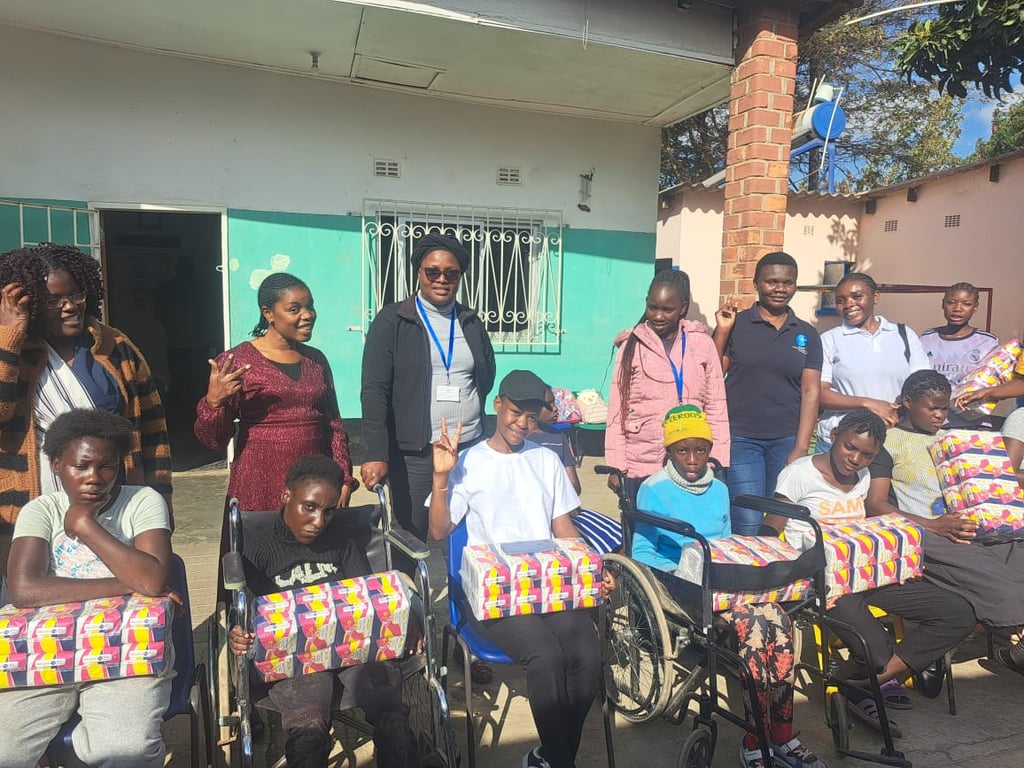
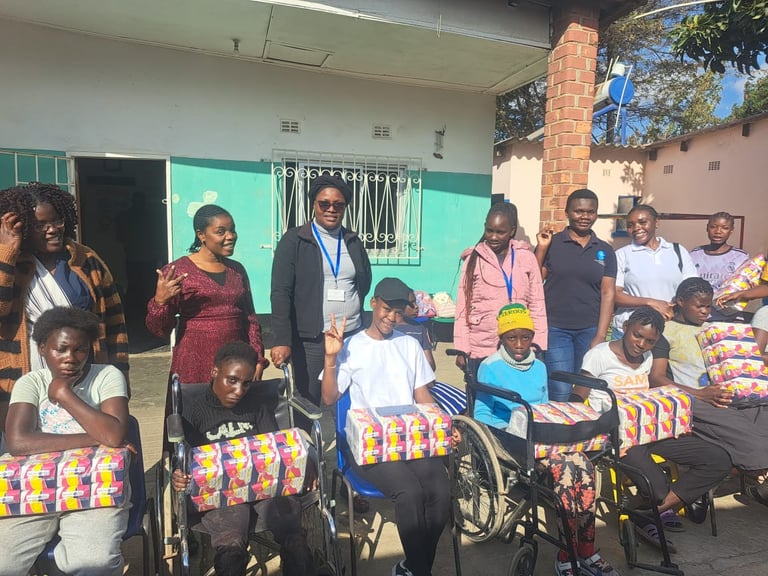
1. Menstrual hygiene and period poverty – WGHZ donates sanitary pads to help schoolgirls manage menstruation with dignity and stay in school. UNICEF notes that many girls miss class due to inadequate menstrual products, stigma, and cultural norms. We also advocate for menstrual policies and improved WASH facilities in schools and health centers.
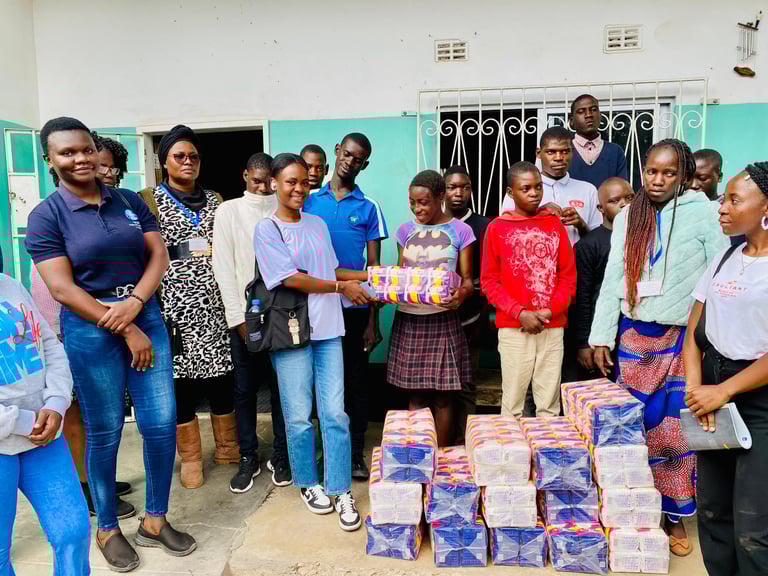
2. Gender responsive epidemic preparedness and response - Women in Global Health Zambia provided vital support to the Ministry of Health during last year's cholera outbreak, donating buckets, sanitary pads for women, and detergents. This effort ensured that women and girls could maintain hygiene and dignity amidst challenging circumstances, while also helping to curb the spread of infection in affected communities.
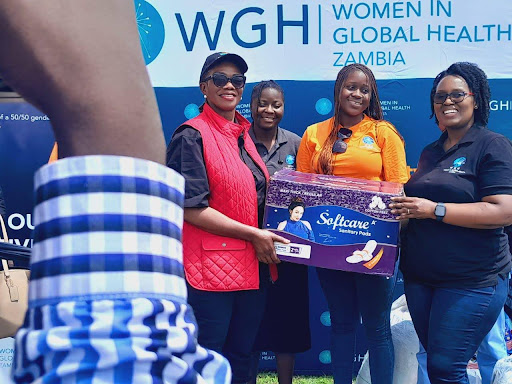
Alt: WGHZ Country Director presenting donations to Ex-Minister of Health Sylvia Masebo (2024)
Alt: Women in Global Health Zambia making sanitary pad donations at Kanyama Community School (2025)
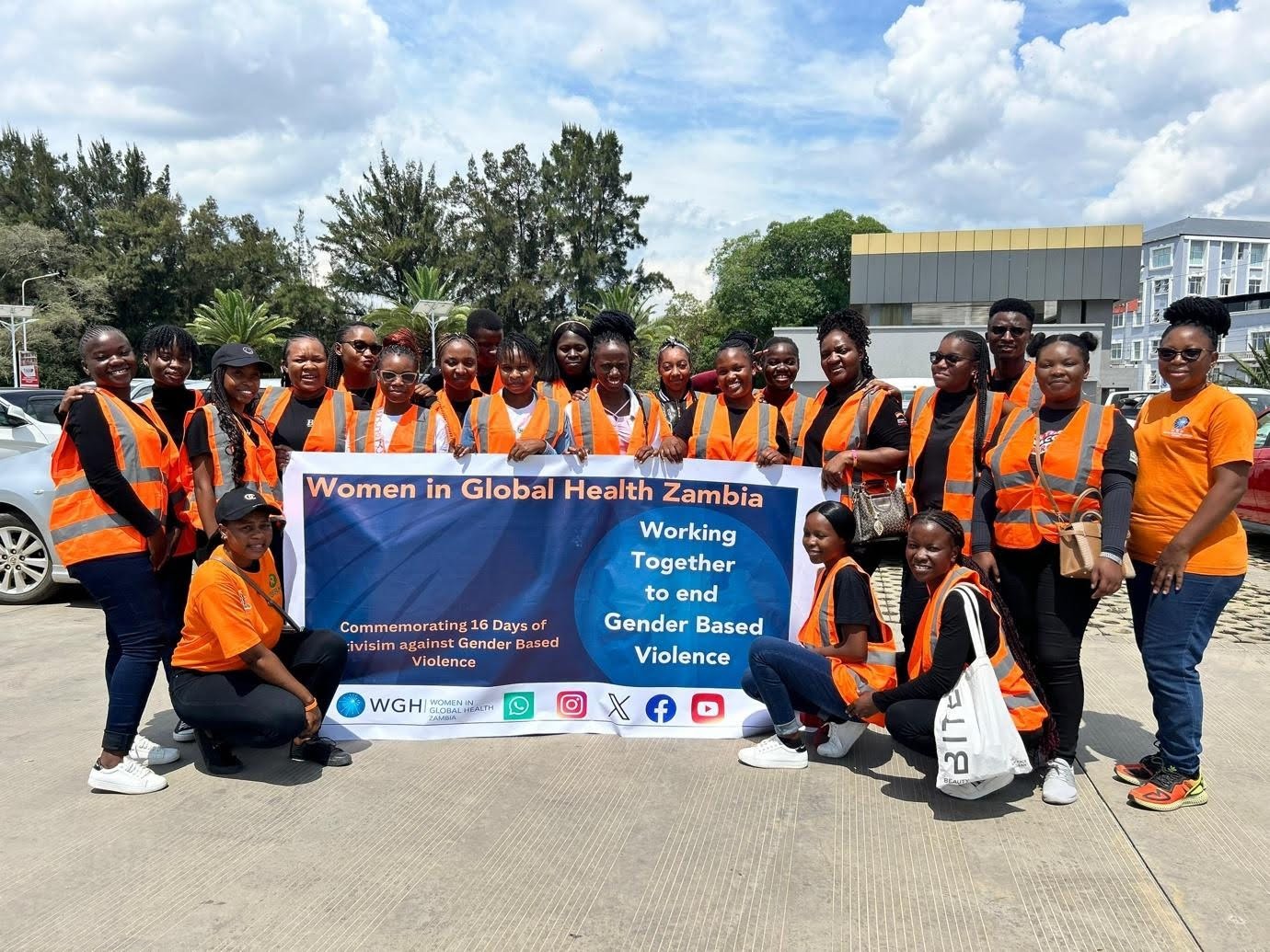
3. Ending Gender Based Violence — WGHZ addresses GBV as a major public health concern linked to power imbalances and other health issues. As an advocacy partner with the Division of Gender, WGHZ supports efforts to eliminate violence against women and girls in Zambia through national events, workplace research, and community campaigns. In December 2024, WGHZ worked with NATSAVE Bank and Chipata Level One Hospital on a week-long GBV awareness campaign.
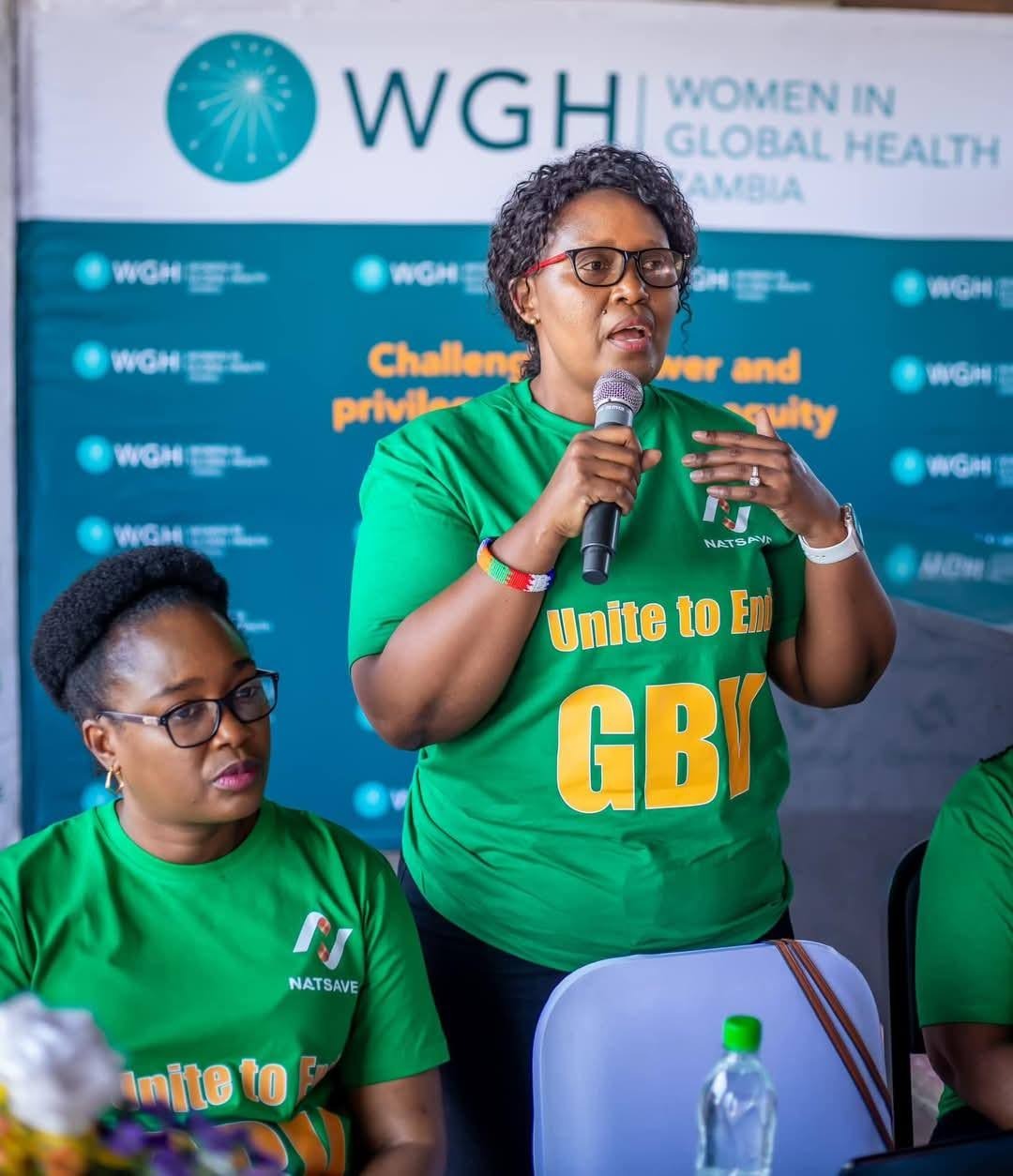
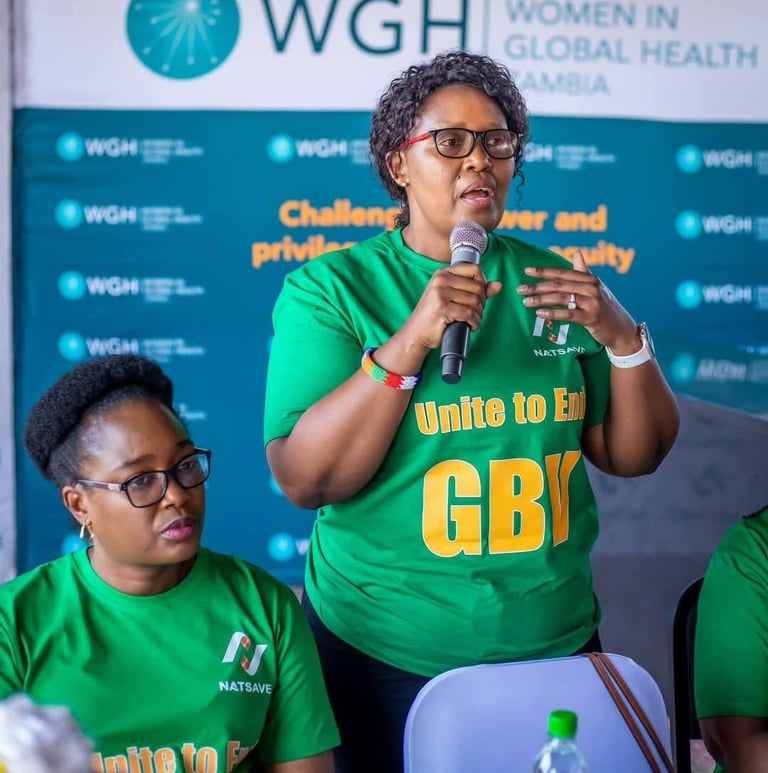
Alt: NATSAVE representative (left) with WGHZ Country Director (2024)
Alt: Members of WGH Zambia commemorating 16 days of actvism against GBV (2024)
Research
WGHZ undertakes research to inform our advocacy efforts. We have contributed to both local and global studies, including the Covid-50/50 initiative, research on access to diagnostics, and a national study on workplace violence among frontline health workers in Zambia. Our advocacy is firmly rooted in evidence, empowering us to engage effectively in policy-level dialogues and drive sustainable change.
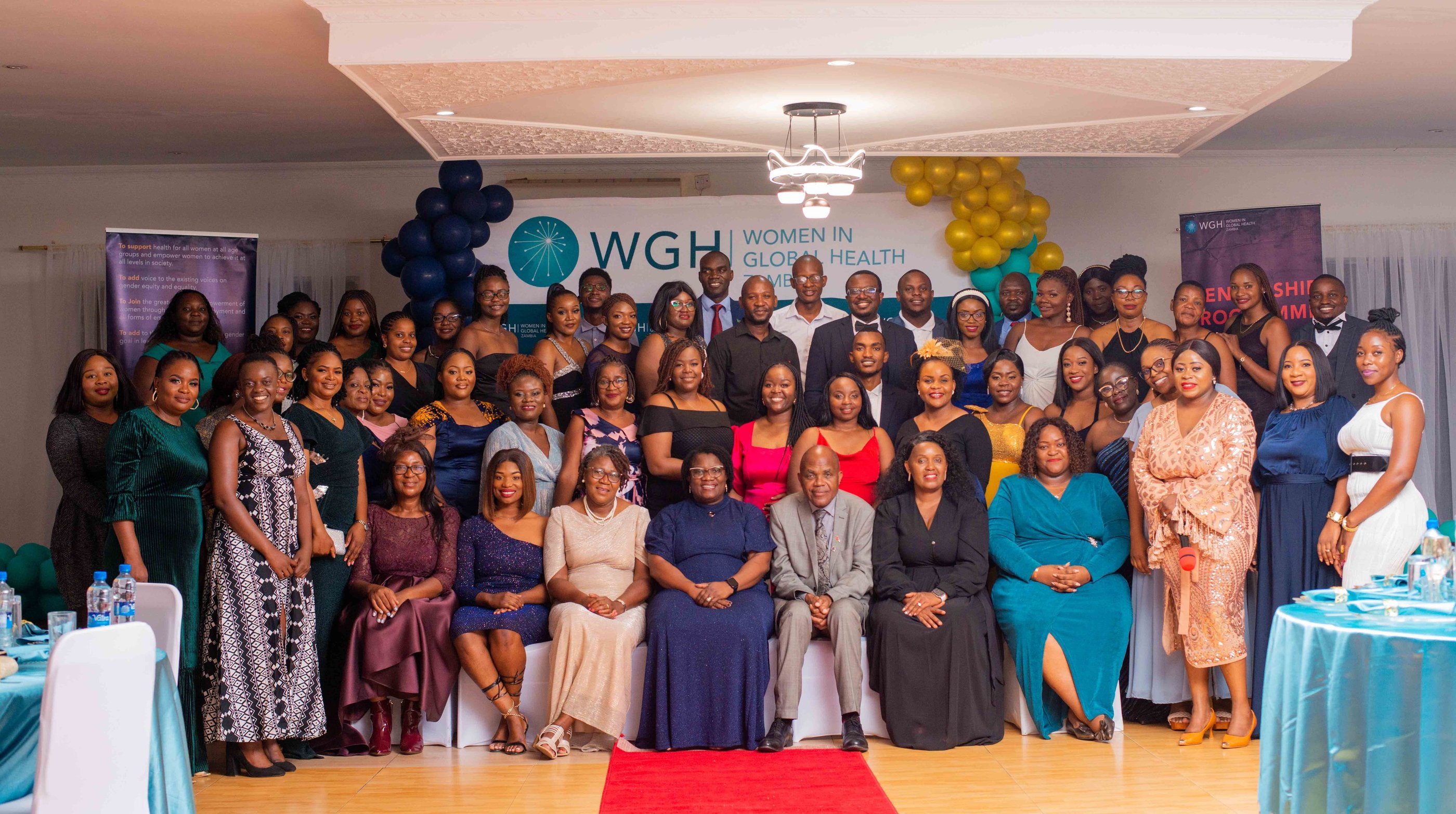
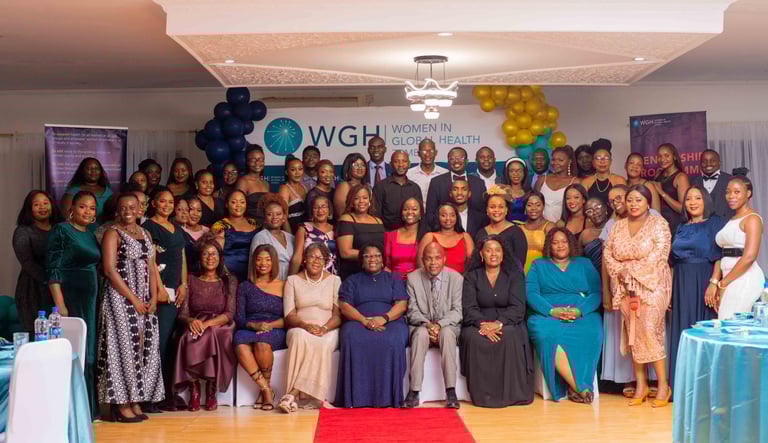
We provide a platform to showcase the valuable contributions of women to health at community, regional, and national levels. Our goal is to shine a light on the often-unrecognized champions who are driving systemic change and advancing public health through impactful leadership.
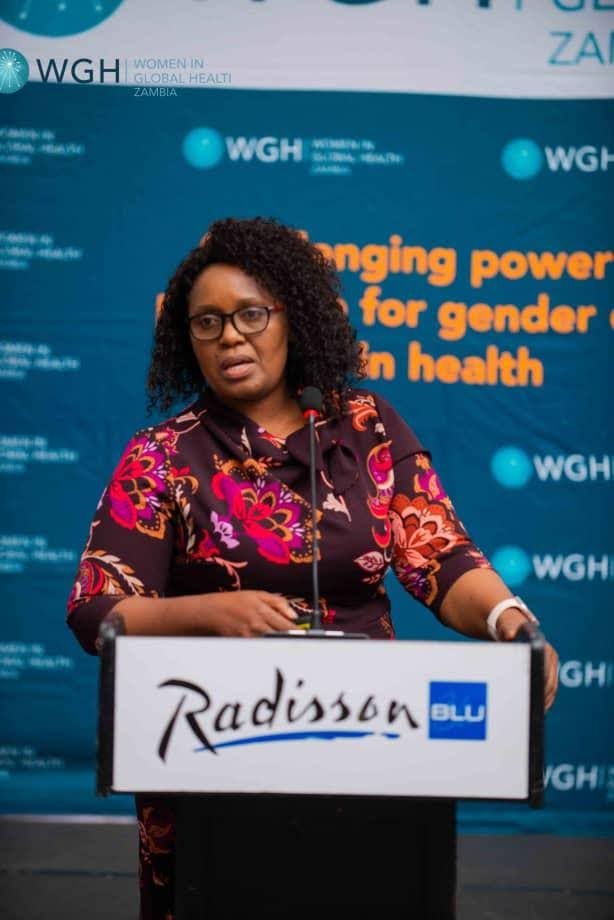
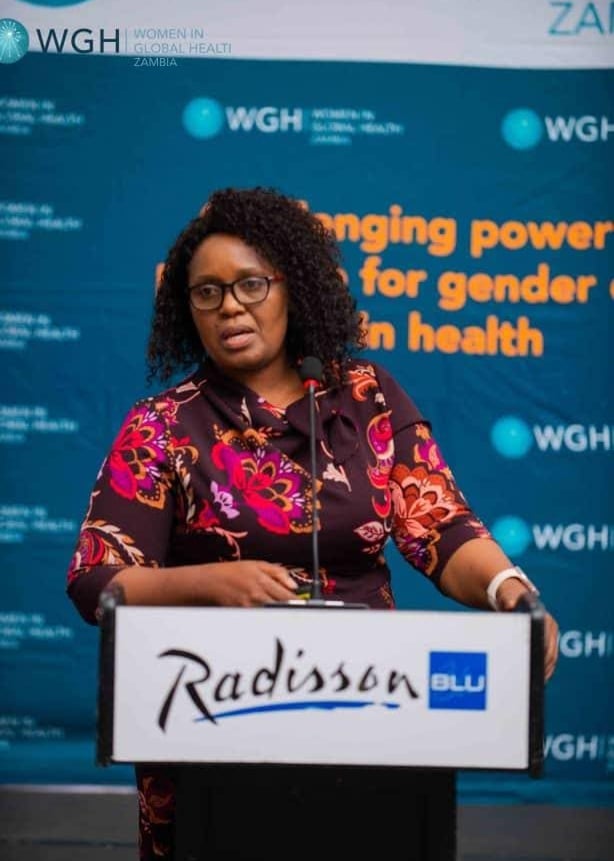
Alt: WGHZ Country Director at the stakeholder meeting during the launch of the study on workplace violence among frontline health workers in Zambia.
Networking & Building Movement
Capacity Building & Mentorship
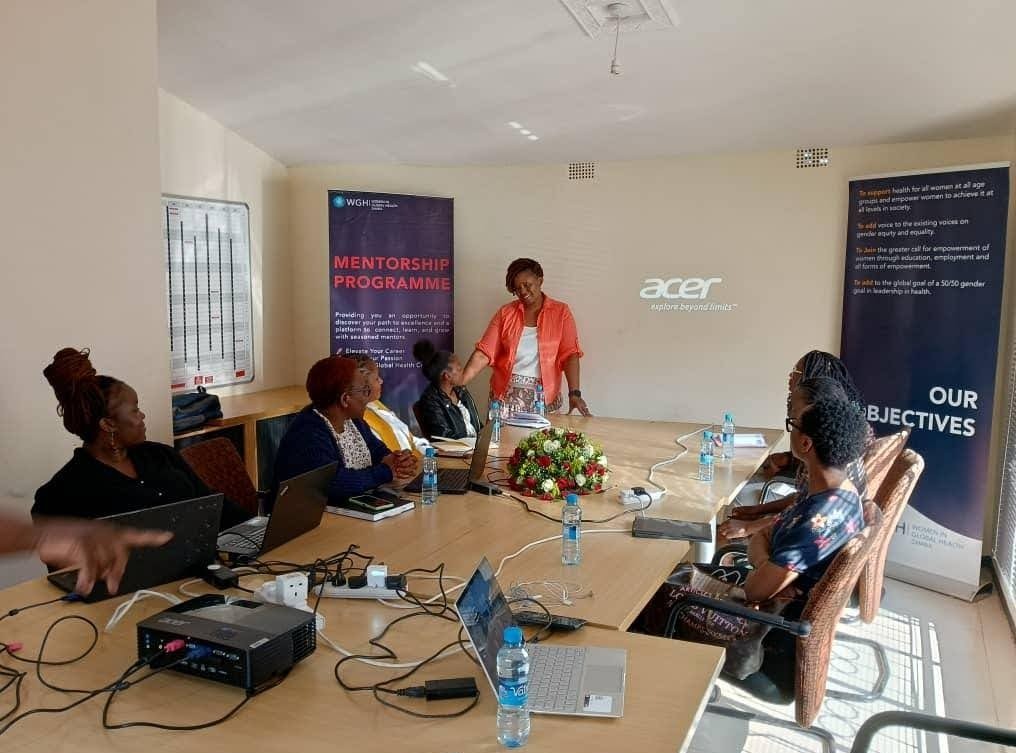
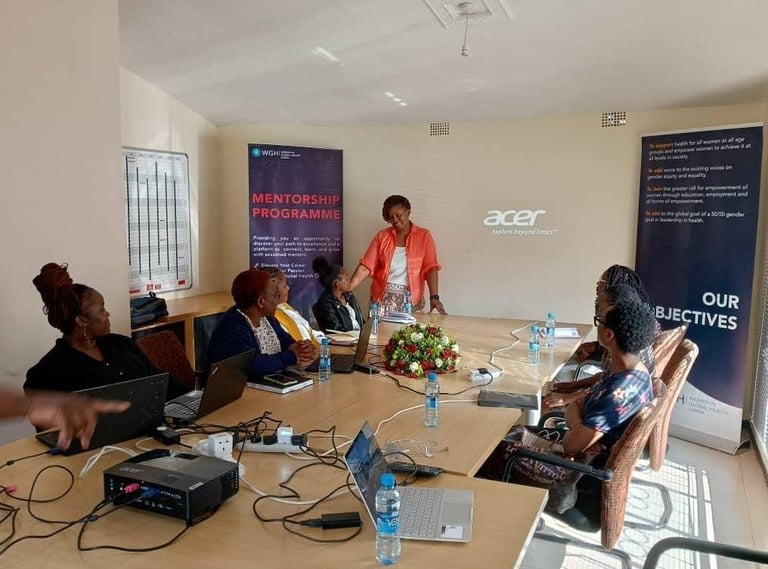
One of the primary needs identified among women is the development of leadership skills and access to mentorship opportunities. In response, last year Women in Global Health Zambia (WGHZ) launched a targeted mentorship program, drawing on the diverse expertise within its membership to support and empower emerging young leaders in public health. Out of twelve participating female health workers, ten successfully completed the six-month program. Notably, two graduates have since pursued their passions by establishing their own organizations, exemplifying the program’s impact on fostering leadership and innovation in the sector.
We are committed to building leadership capacities among our health workers at every level—from community health workers to national managers. We ensure our members are thoroughly equipped with essential leadership skills by sharing tailored training opportunities, offering support throughout application processes, and providing ongoing mentorship focused on self-leadership and professional growth.
Get In Touch!
Contact
Inquiries
Women in Global Health Zambia © 2026. All rights reserved.
Powered by: Inerun Zambia.